
TL;DR
- Marketing leaders are swapping polished LinkedIn headshots for exaggerated AI-generated caricatures.
- The format captures personality, career journey, and the chaos behind the job title.
- Leaders say it reveals character, tension, and joy that a studio photo never could.
- Results depend heavily on prompting and how much public/AI-chat data a person has fed the model.
- It's distinct from the more controversial trend of photorealistic AI headshots.
- Unlike fake studio portraits, caricatures work because they're openly illustrated, not pretending to be real.
The corporate headshot is having a midlife crisis — and marketing leaders are the ones pulling the trigger.
Scroll through LinkedIn this month and you'll notice something strange happening to the profile pictures of some of the industry's most senior marketers. Gone are the tailored blazers, the studio lighting, the arms folded just so. In their place: exaggerated, cartoon-bright AI caricatures — oversized grins, swirling brand icons, tiny visual jokes about late nights and impossible deadlines.
It's not a glitch. It's a trend. And marketing leaders say it's telling audiences something a polished headshot never could.
A Different Kind of Portrait
The appeal isn't really about the art style. It's about what the art style is allowed to say.
A traditional headshot is built to project competence: good lighting, a suit, a confident half-smile. An AI caricature, by contrast, gives leaders room to show personality, career journey and the inner motivations that a corporate photo was never designed to carry. It can capture the energy, the chaos, the humour, and the constant balancing act that comes with a career in marketing.
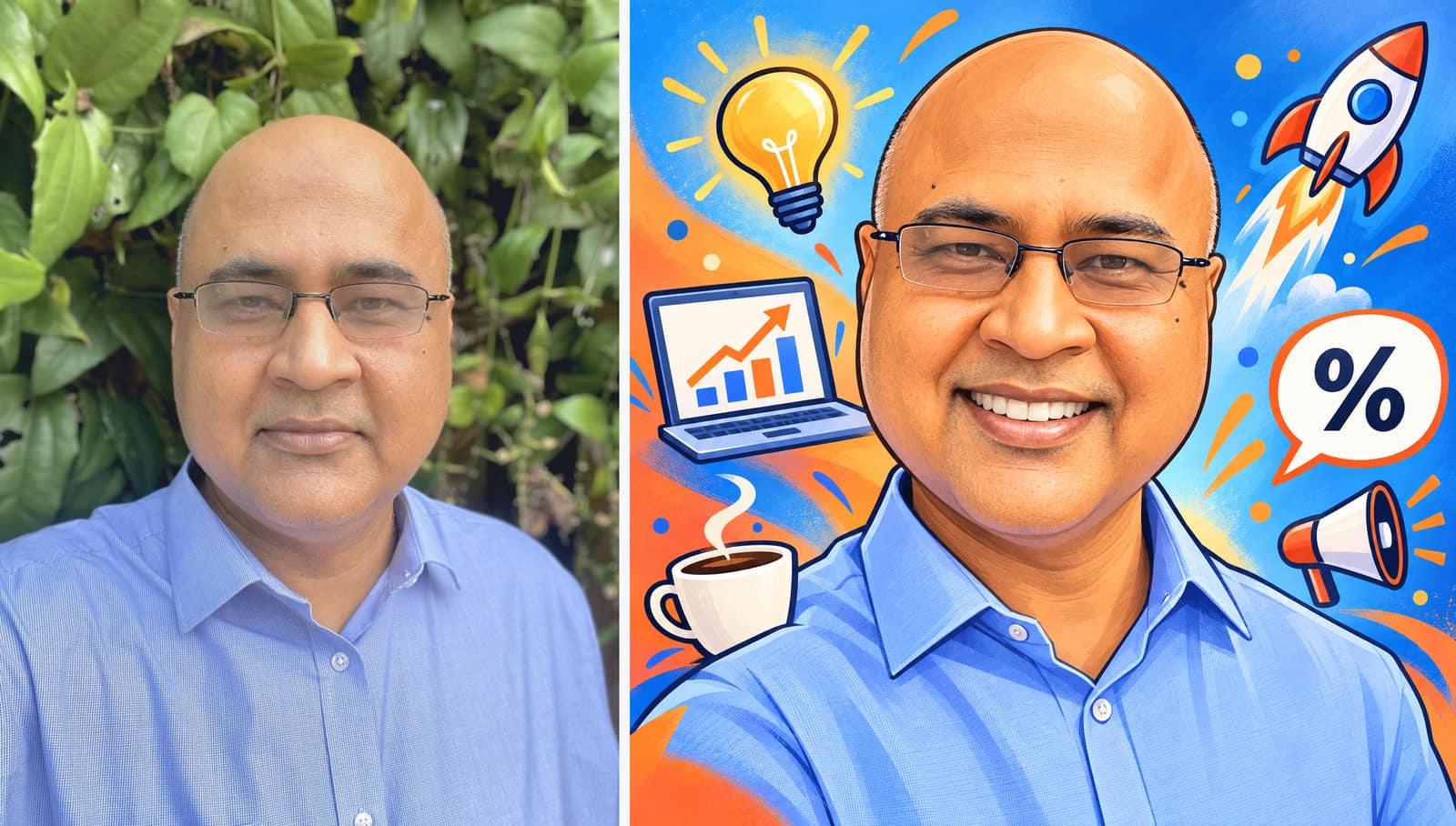
For audiences who are, frankly, tired of corporate polish, that shift lands. People are responding to individuality, authenticity and a bit of visual fun — a welcome break from a feed full of identical grey backdrops. And it's part of something bigger: generative AI has made creative self-expression cheap, fast and culturally relevant enough that standing out no longer requires an agency retainer.
“A Headshot Is Safe. A Caricature Is Honest.”
Ask marketing leaders why they're making the switch, and the same theme keeps surfacing: a headshot shows how you look. A caricature shows who you are.
A headshot signals competence, a suit, and good lighting. A caricature can signal 'I overthink for a living' — and the absurdity of the job. — Abdul Sani Abdul Murad, RHB
Headshots show how you look. Caricatures show where you've been, what you've built, and the story behind the role. — Koo Sok Hoon, Shangri-La Singapore
Headshots capture position and credibility. Caricatures capture character, energy, and how you operate — strategy and storytelling, boardroom and brand. — Adora Sarah Chou, Guzman y Gomez
A headshot is a curated projection of how you want to be seen. An AI caricature, especially one that's lightly edited, is more of a reflection of the themes and tone in your actual AI chats and digital footprint. — Rashish Pandey, Fortinet
A headshot is safe. A caricature is honest. — Peilin Lee, Nespresso Singapore
LinkedIn is usually polished. This trend stands out and feels more relatable and memorable. — Alex Chan, Geneco
Source of quotes: Marketing Interactive's story on AI caricatures for CMOs.
Why It's Spreading Right Now
A few forces are converging to push this trend from novelty to normal:
- FOMO — people want in on a visual trend that feels timely and culturally relevant.
- Delight — there's genuine curiosity about how accurately tools like ChatGPT or Gemini can synthesise a public persona.
- Charm — an illustrated format feels more approachable than a studio shot with folded arms.
- Speed and cost — the results are joyful, personalised, generated in seconds, and often free.
- Democratised design — what used to require an agency or a Photoshop expert is now available to anyone with a prompt.
It also sits neatly in a wider lineage of playful AI visual trends — think Ghibli-style portraits or AI "doll box" images — that have already primed audiences to enjoy seeing familiar faces reimagined.
What a Caricature Reveals That a Photo Never Could
Beyond the novelty, leaders point to something more substantive: these images surface parts of the job that a headshot simply has no visual vocabulary for.
- The tension baked into modern marketing — brand versus performance, creativity versus commerciality, courage versus caution.
- The layered nature of leadership — strategist, creator, operator and communicator, often within the same hour.
- The joy in the craft itself, not just the title and the lighting.
- An inner world — the smile, the energy, the purpose, the "sparkle" after a genuinely good year in the role.
- Even the coaching and people-leadership work that audiences don't always associate with marketing.
In other words: the exaggeration isn't a distortion of the truth. For a lot of these leaders, it's a more accurate picture of it.
The Caveats Worth Sitting With
Before every marketing leader rushes to swap out their profile photo, it's worth naming the fine print.
- The output is only as good as the prompt and the public footprint behind it — several leaders admit they refined their caricature extensively before it felt right.
- The trend is a quiet reminder of just how much personal and professional detail people have already fed into AI models, whether they meant to or not.
- This is a distinct phenomenon from photorealistic AI headshots — fake studio portraits generated to look like real photography — which are currently facing real trust backlash in hiring and brand contexts.
That last distinction matters. Part of why the caricature trend works is precisely because it doesn't pretend to be a photograph. It's obviously illustrated, openly artificial, and makes no claim to documentary accuracy. That honesty about its own artifice may be exactly what lets audiences trust it — even as they grow warier of AI images that try to pass as real.
The Takeaway
Professional headshots aren't disappearing overnight. But for a growing number of marketing leaders, the polished, competence-signalling photo is no longer the only — or even the best — way to introduce themselves. An AI caricature can carry the story, the contradictions and the character that a studio shot was never built to hold.
In an industry built on storytelling, perhaps it makes sense that its leaders are the first to rewrite how they tell their own.
References/Sources: