
A Performance Marketer's Guide to Intent-Driven Search Campaigns
Search behavior has quietly crossed a threshold. Where users once typed clipped, two-to-three-word fragments into the Google search bar, they are now typing the way they would ask a knowledgeable friend: full sentences, comparisons, and qualifiers, shaped by months of practice talking to generative AI tools. A query that used to read "running shoes flat feet" now shows up as "comfortable running shoes for flat feet that work on concrete." That shift in phrasing is not cosmetic. It represents a structural change in how buying intent reaches the auction.
For years, Search campaign performance has been gated by match type. Exact and phrase match keyword lists, however carefully built, were designed to catch strings, not meaning. A campaign built around "waterproof hiking boots" simply never fires for "boots that will keep my feet dry on a rainy overnight hike," even though the buyer behind both queries wants the exact same product. That gap between what marketers can list as keywords and what people actually type has been widening every year that conversational and AI-assisted search grows.
Google Ads AI Max for Search is the response to that gap. Having moved out of beta in April 2026, AI Max is not a new campaign type sitting alongside Search, Shopping, and Performance Max. It is a continuous optimization layer that sits inside a standard Search campaign and works to match underlying intent rather than exact keyword strings, using Gemini to read landing pages, existing assets, and query patterns.
Key Stat
AI Max campaigns using the full feature suite (search term matching, text customization, and Final URL Expansion) deliver an average of 7% more conversions or conversion value at a similar CPA/ROAS versus search term matching alone. Across all campaign types the average lift is 14%, climbing to 27% for accounts that were previously exact- and phrase-match heavy.
"AI Max is moving out of beta, with improved performance quality across targeting."
- Google Ads Announcement, business.google.com, April 2026
This article is written for search marketers, PPC specialists, e-commerce growth leads, and performance marketing directors who need to decide how, and how fast, to adopt AI Max. The thesis is straightforward: AI Max bridges the gap between conversational search intent and incremental conversions, and the marketers who pilot it deliberately, with the right guardrails, will capture that lift before the September 2026 auto-upgrade removes their ability to choose.
II. Core Mechanisms of AI Max
AI Max works through three connected mechanisms layered on top of an existing Search campaign. None of them function in isolation; Google's own benchmark data is built on accounts running all three together.
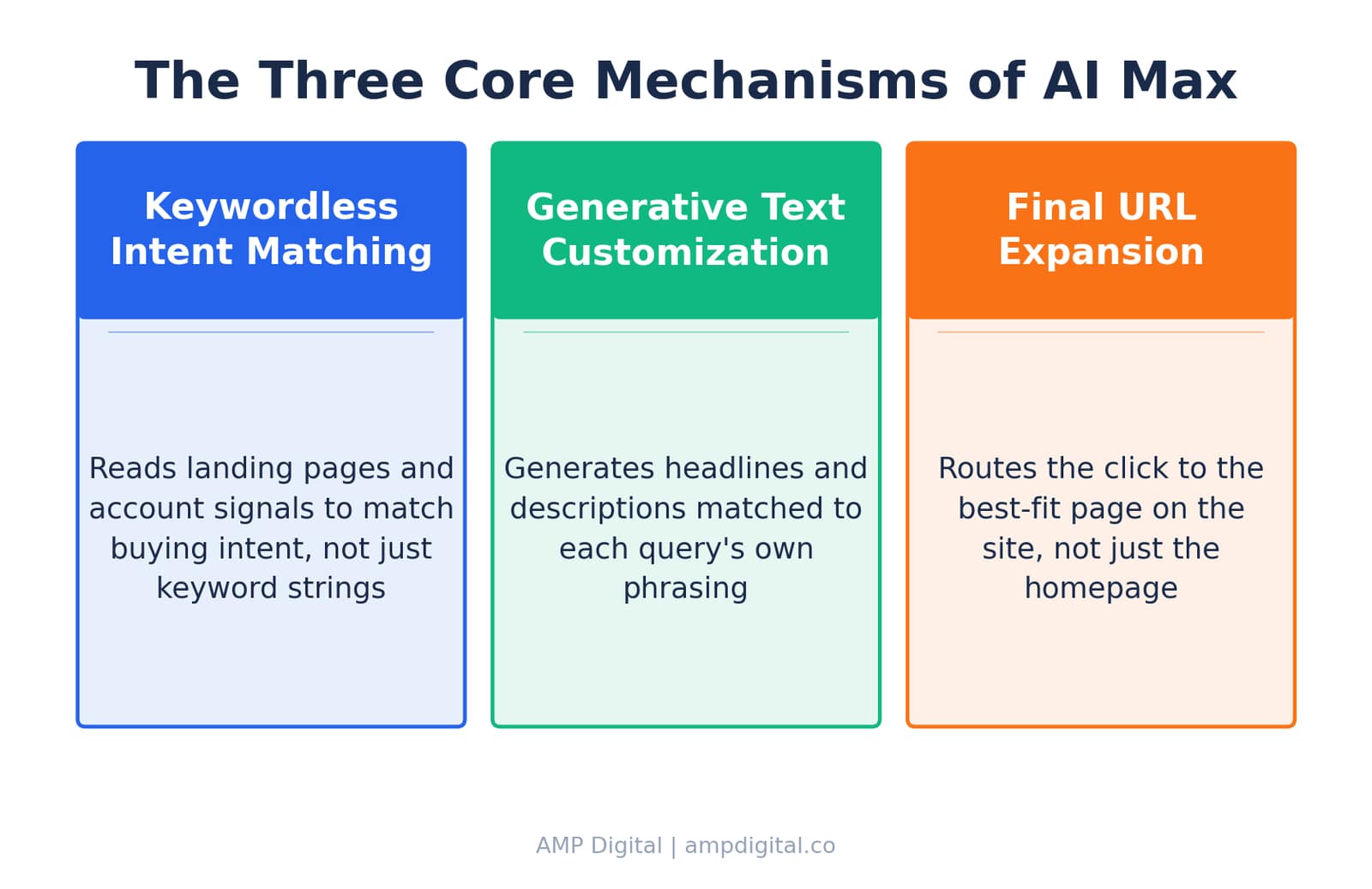
Figure 1. The three core mechanisms that make up the AI Max feature suite.
1. Intent-Based & Keywordless Search Term Matching
The foundation of AI Max is keywordless technology: Google's systems read a campaign's landing pages, existing keyword assets, and account signals to identify queries that share underlying buying intent with the campaign, even when no keyword string matches. This works alongside broad match expansion, but it goes further than broad match alone by scoring a query on the intent it expresses rather than the words it contains.
In practice, this is what lets a Search campaign built around "project management software for agencies" also compete for "tool to track client hours and billing across multiple projects." No keyword list, however exhaustive, would have anticipated that exact phrasing. Intent-based matching does not need it to.
2. Generative Text Customization
A static headline written for a three-word keyword rarely reads naturally against a 12-word conversational query. Text customization solves this by generating headlines and descriptions dynamically, aligning ad copy with the specific phrasing and framing of the query being matched, while staying inside the account's existing asset library and any text guidelines the advertiser has set.
Pro Tip
Set Text Guidelines before enabling text customization. AI Max allows up to 25 term exclusions and 40 messaging restrictions, letting you block specific claims or phrases the AI should never generate on your behalf.
3. Final URL Expansion
The third mechanism, Final URL Expansion, maps a complex search intent directly to the most relevant sub-page on the advertiser's site rather than sending every click to a single, generic landing page. A query about return policies for a specific product category can land on that category's FAQ page instead of the homepage, cutting the friction between click and conversion.
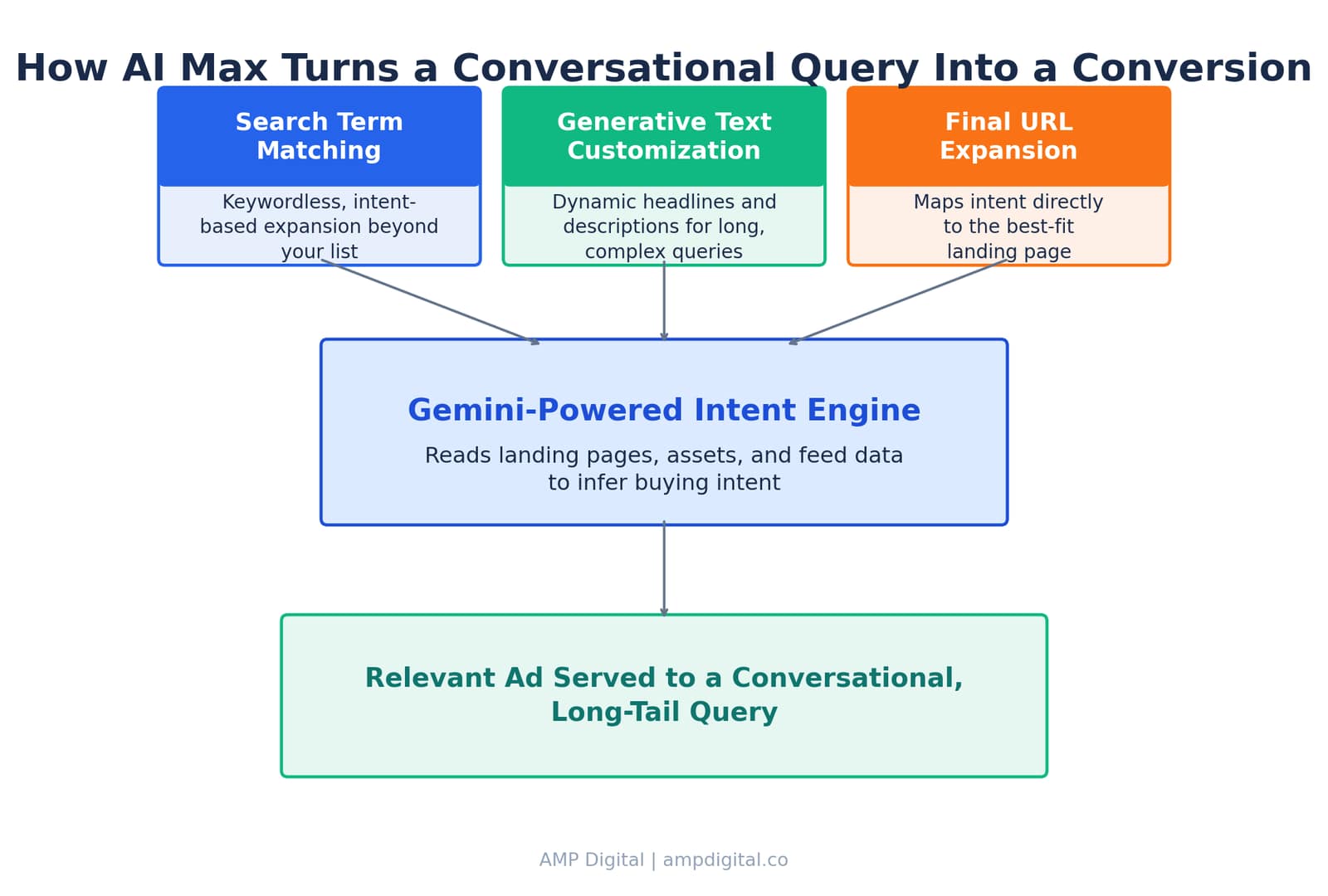
Figure 2. How the three mechanisms combine inside a Gemini-powered intent engine.
"Keywords are just one of the signals it uses."
- Ginny Marvin, Google Ads Liaison, in conversation with Smarter Ecommerce, 2026
Taken together, these three mechanisms move the campaign from a keyword-matching exercise to an intent-matching one. The figure below shows how that changes the shape of the funnel itself, from a rigid, string-based path to a continuous, intent-read path.
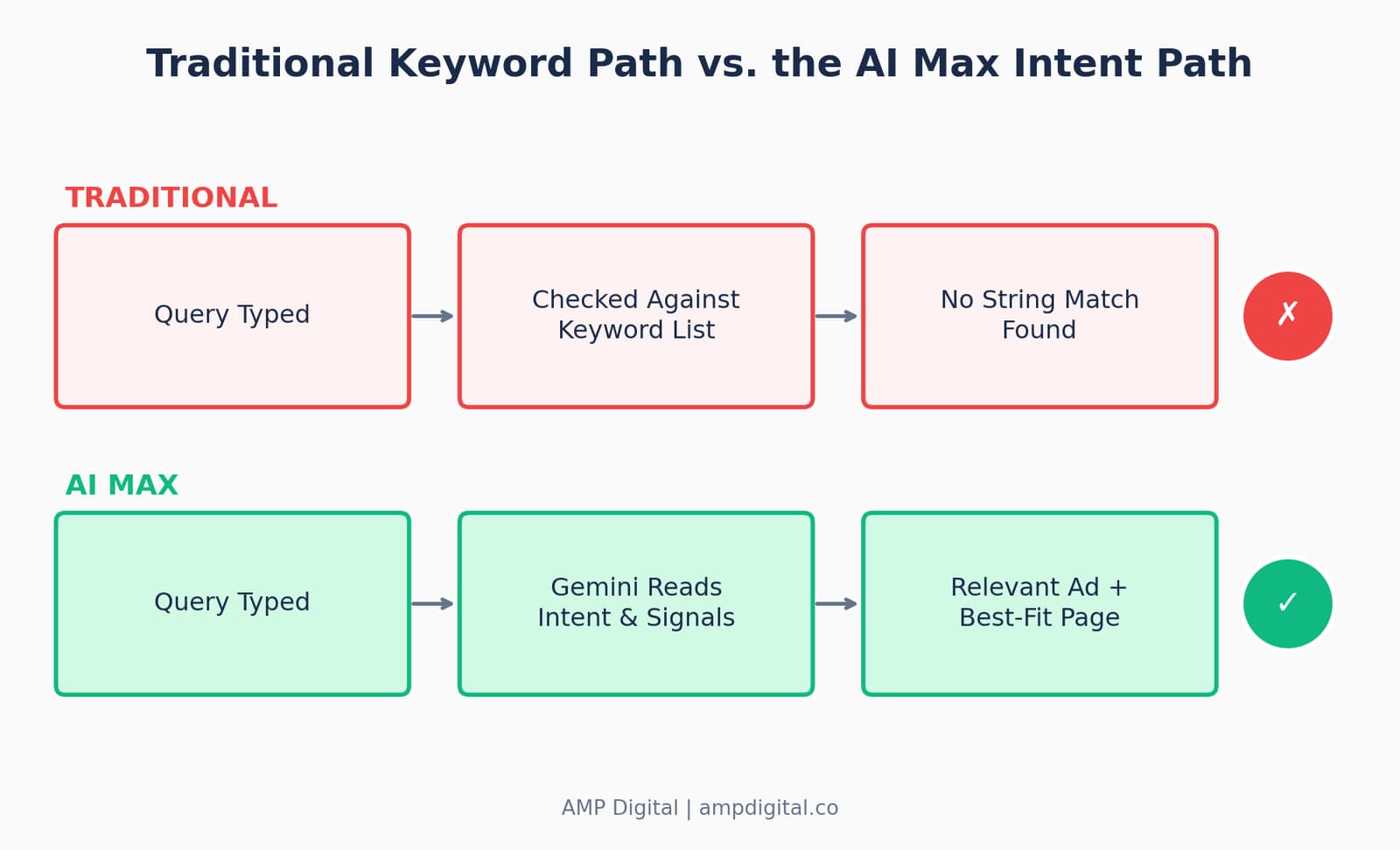
Figure 3. The traditional keyword path compared with the AI Max intent path.
III. Key Performance Drivers & Strategic Benefits
The mechanics matter only insofar as they change outcomes. Four performance drivers explain why AI Max is generating both enthusiasm and caution across the PPC community.
Monetizing Hard-to-Reach Queries
The most direct benefit is coverage of previously non-conforming long-tail and conversational prompts. These are queries with genuine buying intent that never had a matching keyword, and they were effectively invisible to Search campaigns until AI Max started surfacing them.
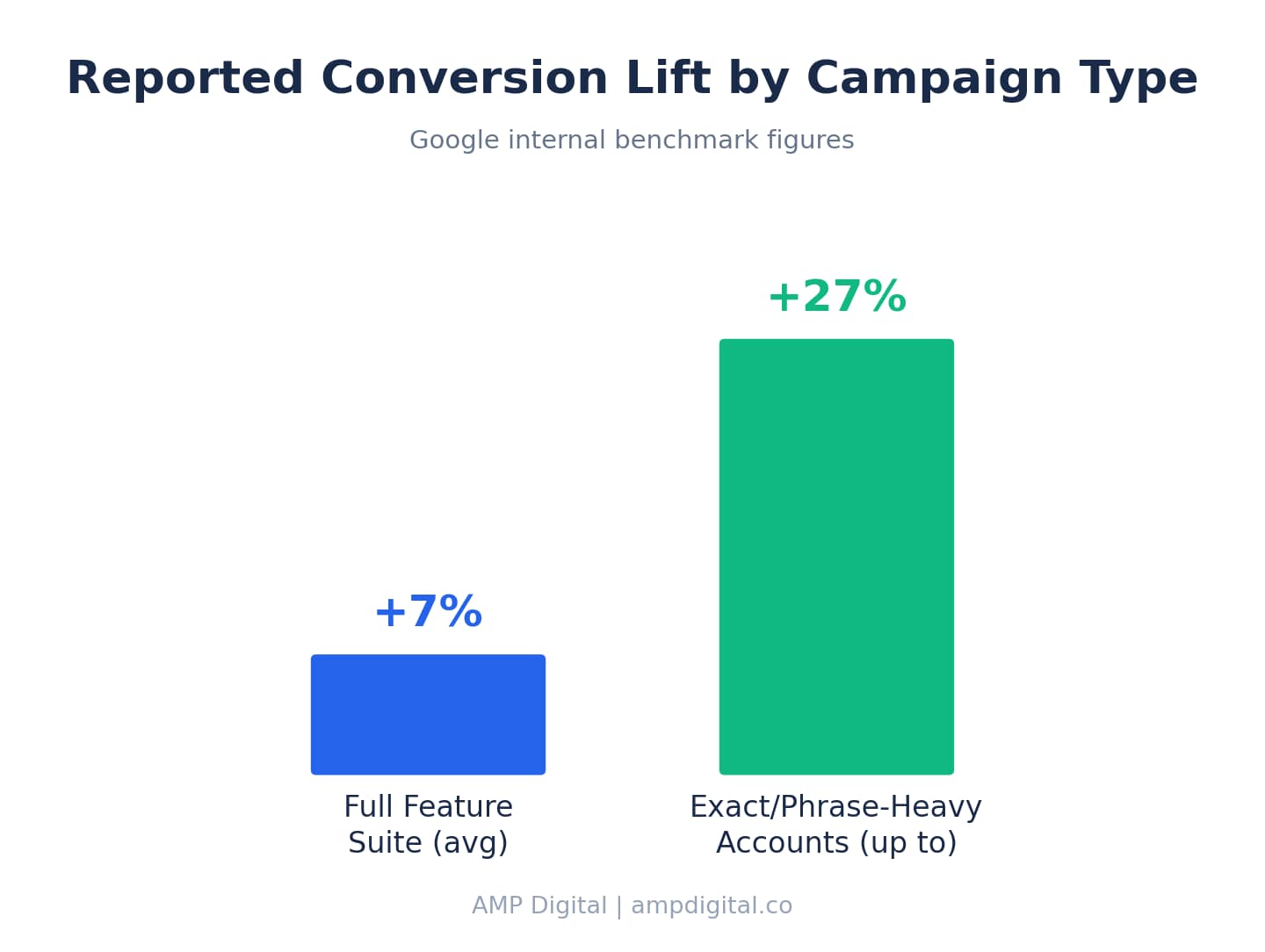
Figure 4. Reported conversion lift varies by how keyword-dependent the starting campaign was.
Gemini Integration & Shopping Reach
AI Max has expanded beyond Search into Standard Shopping campaigns, using Merchant Center feed attributes such as material, fit, and durability to answer conversational, long-tail product queries without requiring a migration to Performance Max. Google has reported that Gemini-powered matching improved the delivery of highly relevant Shopping ads by roughly 20 percentage points.
"Gemini analyses the nuances of longer queries to identify user intent."
- Philipp Schindler, SVP & Chief Business Officer, Google, via Media Marketing, 2026
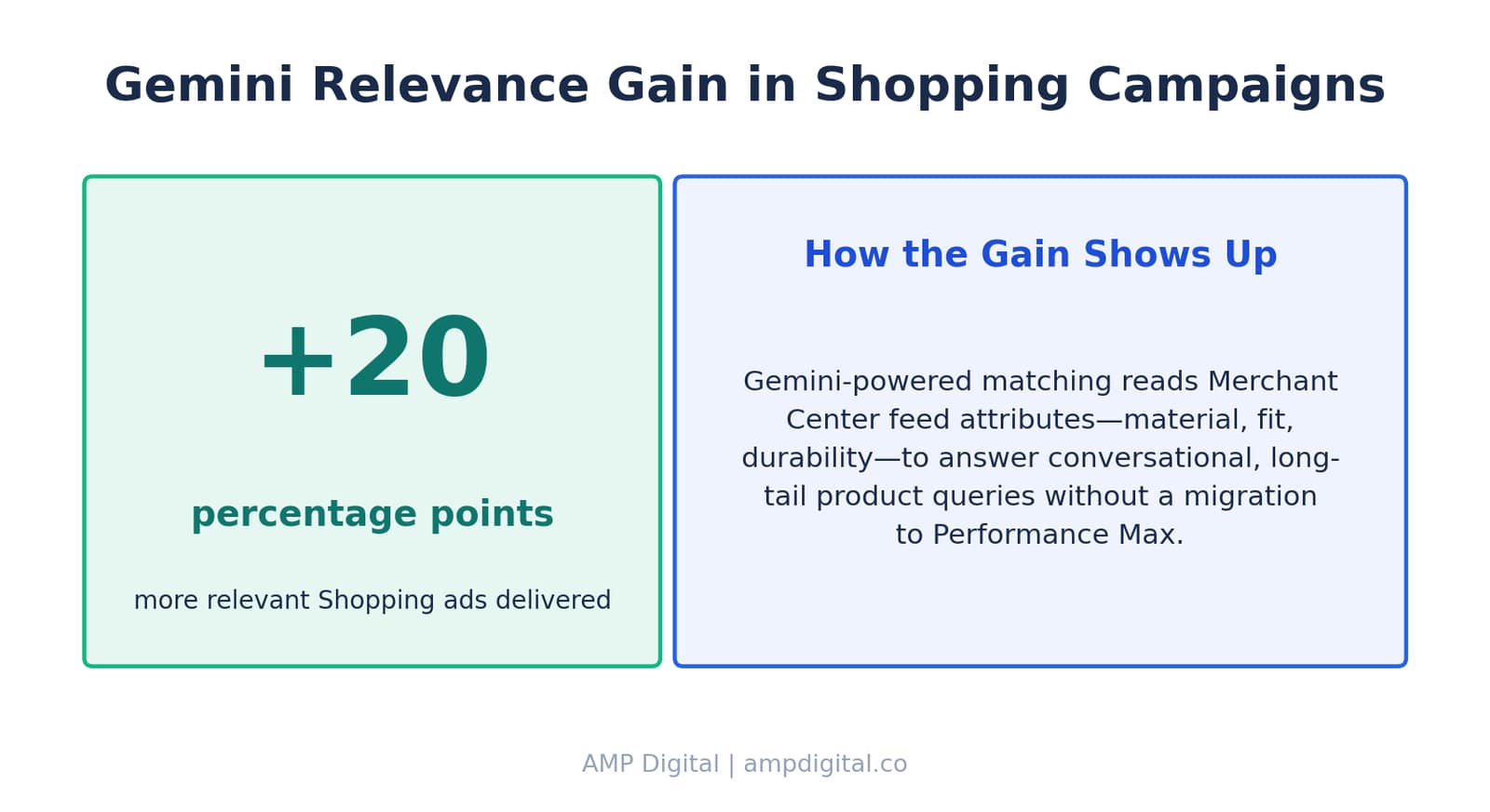
Figure 5. Query source mix and the Gemini relevance gain in Shopping campaigns.
Conversion Lift: What the Data Actually Shows
Google's headline numbers (7% for the full feature suite, up to 27% for exact/phrase-heavy accounts) are internal, aggregate figures. Independent testing tells a more nuanced story. An analysis of more than 250 Search accounts running AI Max found a median revenue lift of 13%, alongside a median CPA increase of 16%. The lift is real, but it is not free.
Data Source | Metric Measured | Reported Result |
Google Ads (internal, full feature suite) | Conversions/value at similar CPA | +7% average |
Google Ads (internal, all campaign types) | Conversion lift | +14% average |
Google Ads (internal, exact/phrase-heavy) | Conversion lift | up to +27% |
Independent study, 250+ accounts | Revenue lift (median) | +13% |
Independent study, 250+ accounts | CPA change (median) | +16% higher |
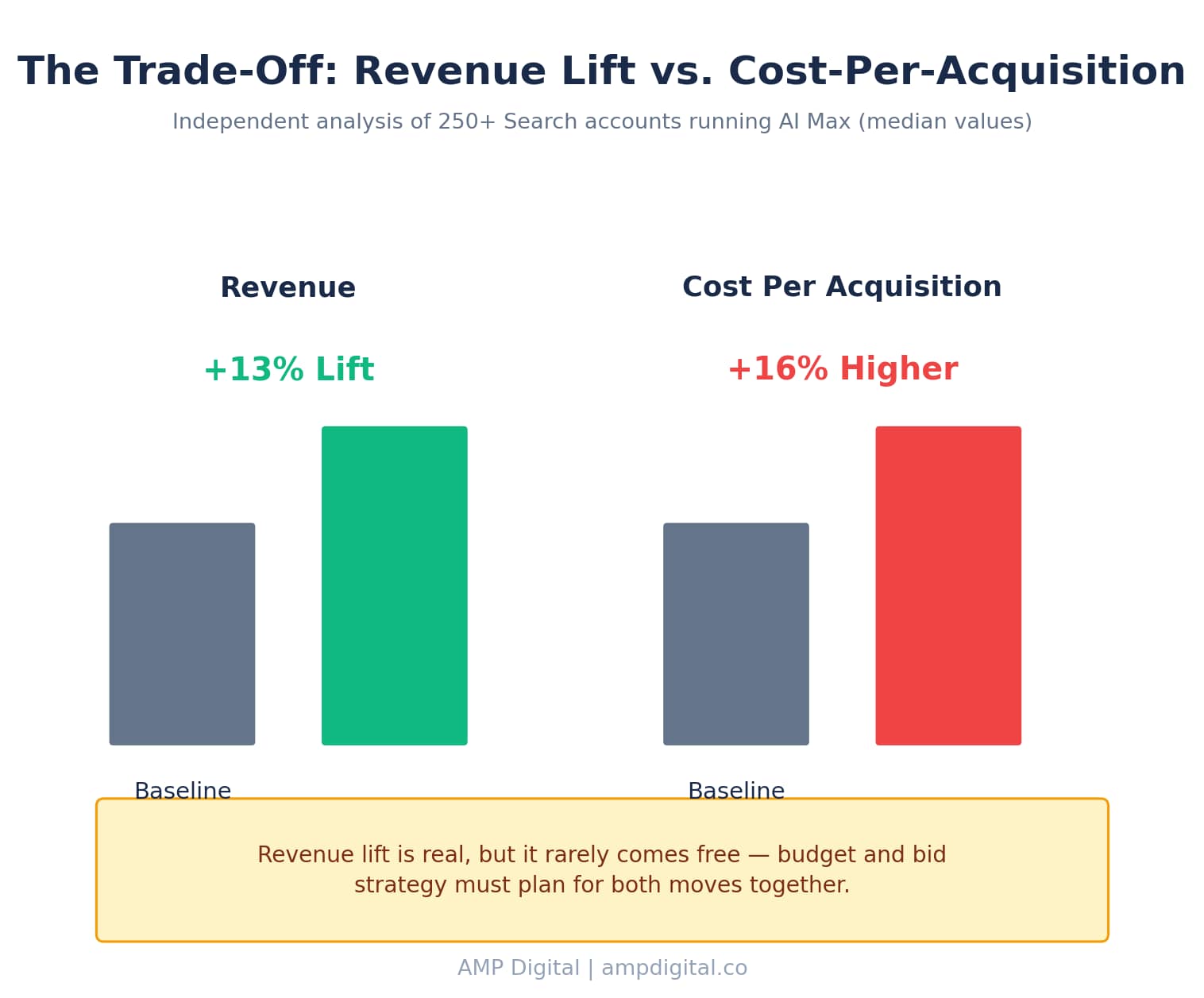
Figure 5b. Revenue lift tends to arrive with a CPA increase, not instead of one.
Warning
Query overlap is real. Independent analysis shows up to 63% of the 'new' traffic AI Max surfaces can already be covered by keywords you own. Audit incrementality before reallocating budget on the strength of raw new-query counts alone.
Control vs. Automation Balance
AI Max's biggest departure from Dynamic Search Ads, its closest predecessor, is the amount of control it hands back to the advertiser. Brand inclusions and exclusions, location of interest settings, and negative-intent exclusions all sit alongside the automated matching, so advertisers are not choosing between control and reach; AI Max is built to let both coexist.
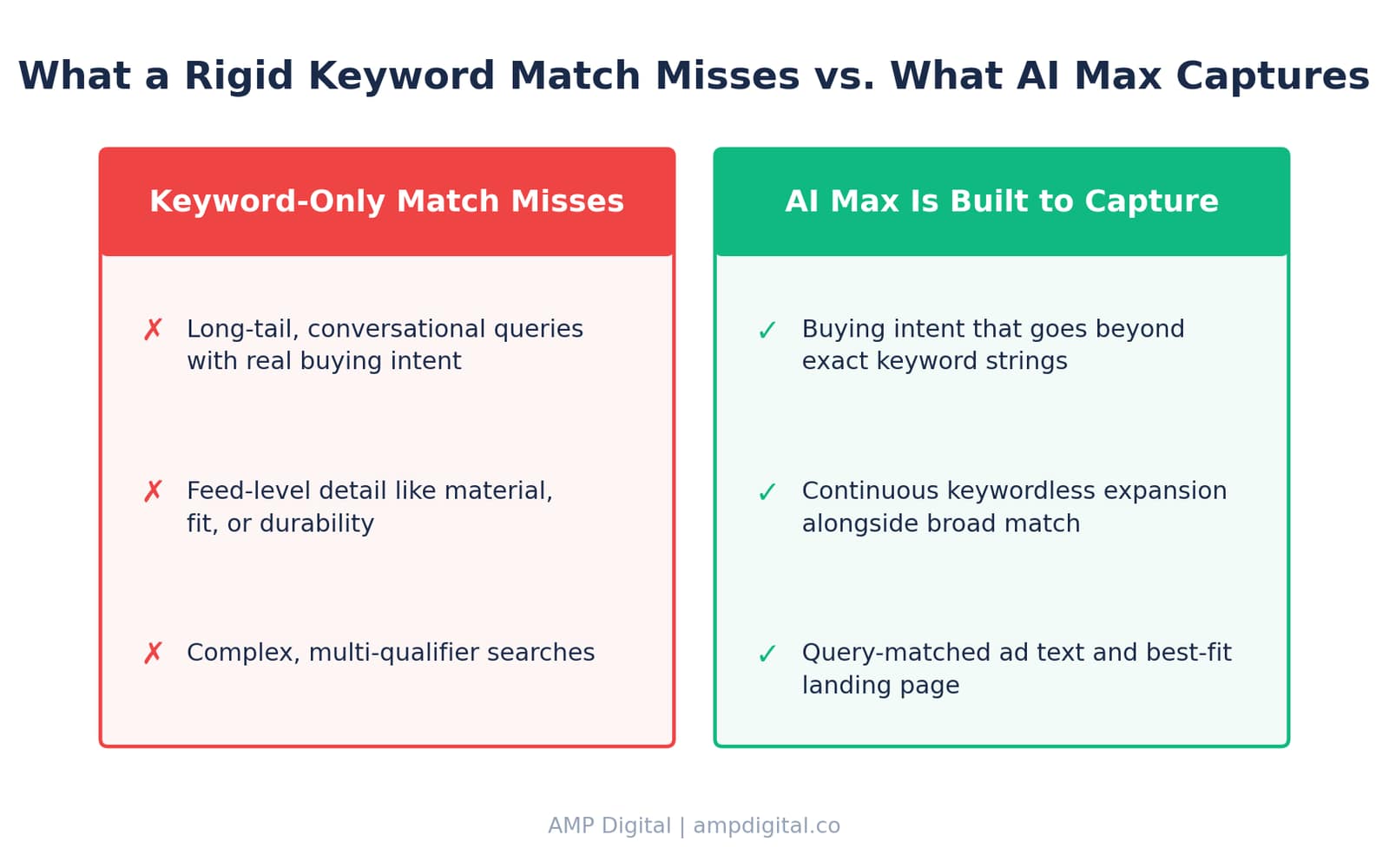
Figure 6. What a rigid keyword match misses versus what AI Max is built to capture.
IV. Practical Implementation Checklist for Marketers
AI Max rewards preparation. The four steps below reflect what advertisers who have already piloted the feature suite consistently point to as the difference between a clean lift and a budget headache.
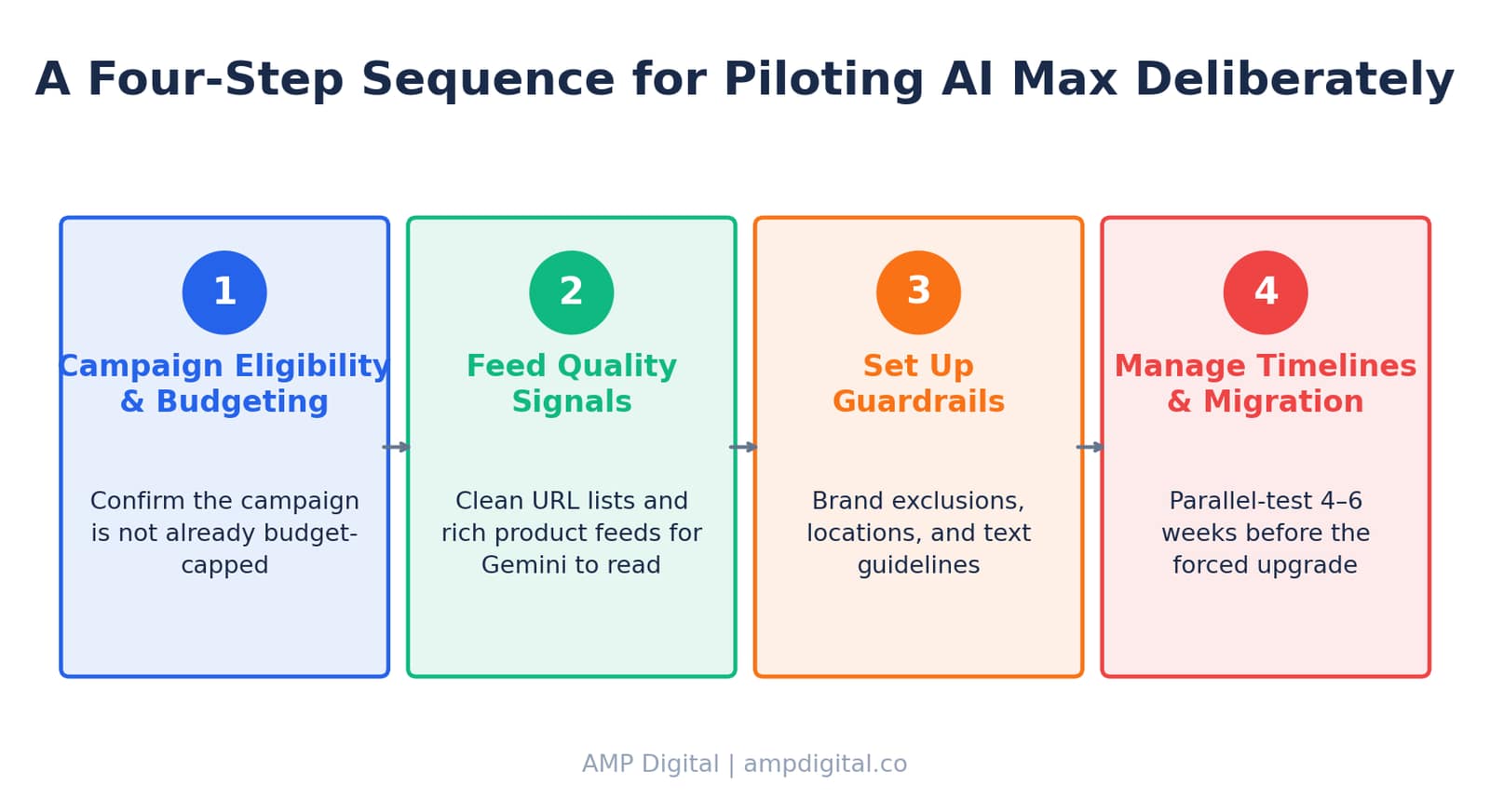
Figure 7. A four-step sequence for piloting AI Max deliberately.
Step 1: Campaign Eligibility & Budgeting
Confirm the Search campaign is not already budget-constrained before turning on the AI Max layer. A campaign that is losing impression share to budget caps will not show the incremental lift AI Max is capable of; it will simply reallocate the same limited budget across a wider set of queries.
Step 2: Feeding the Machine Quality Signals
AI Max is only as good as the material Gemini has to read. Clean URL inclusion and exclusion lists, rich product feeds (for Shopping), and well-structured source assets directly determine how precisely the system can match complex queries to the right page and the right message.
Update
Migration timeline: campaigns using Automatically Created Assets and campaign-level broad match are auto-upgraded to AI Max starting September 2026. Dynamic Search Ads campaigns migrate on a separate clock, completing by February 2027.
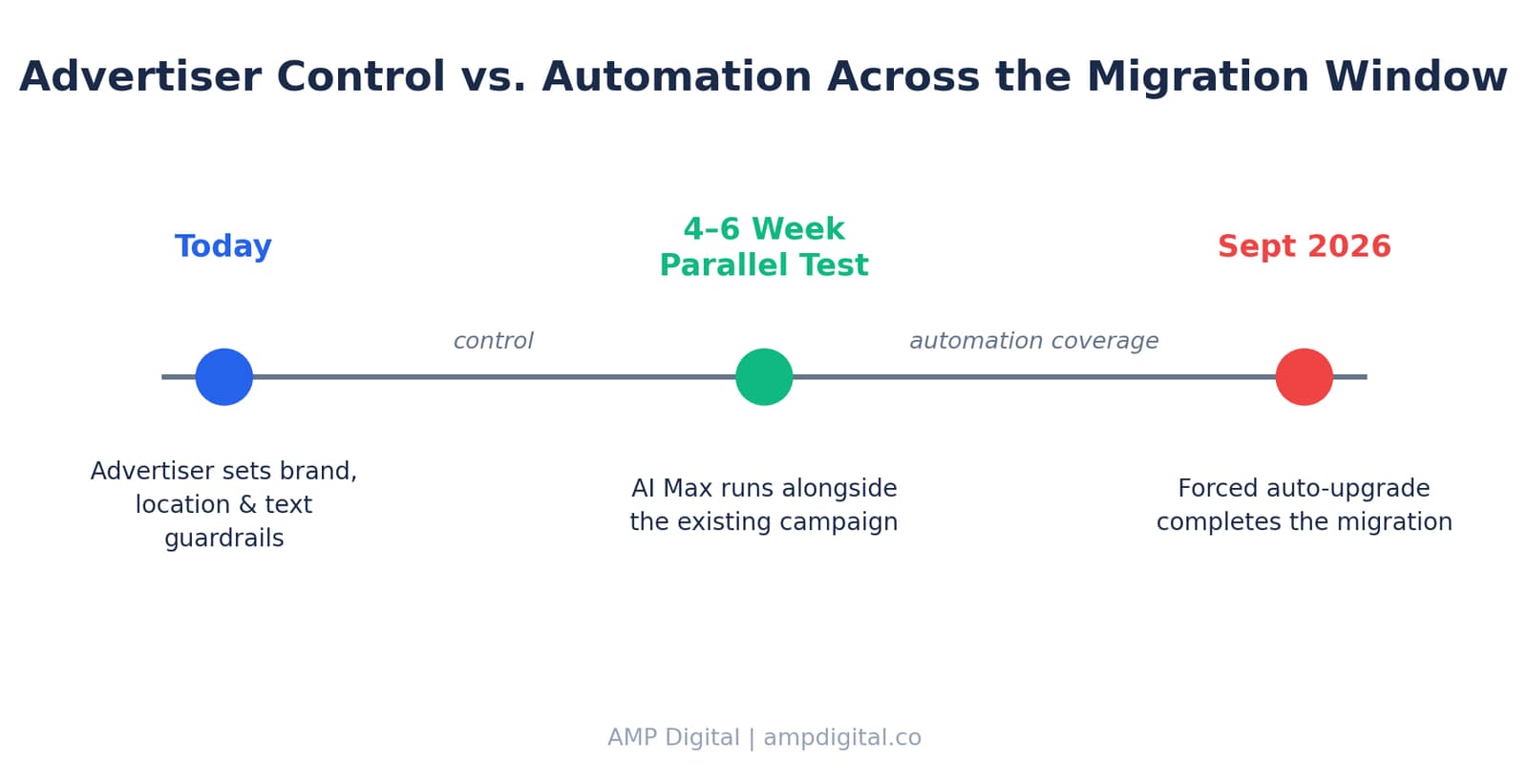
Figure 8. Advertiser control gives way to automation coverage across the migration window.
Step 3: Setting Up Guardrails
Brand exclusions, location of interest settings, and text guidelines protect brand identity while the automated layer does its work. These controls did not exist under DSA, and they are the clearest signal that Google built AI Max to be steerable rather than a black box.
Step 4: Managing Timelines & Migrations
Plan asset migrations and the DSA transition against Google's published dates rather than reacting to the forced upgrade. Running AI Max in parallel with existing campaigns for four to six weeks, using Google's built-in experimentation split, is the most reliable way to measure real incremental lift before committing budget.
"More revenue, but at a higher CPA."
- PPC Live Independent Analysis, 2026
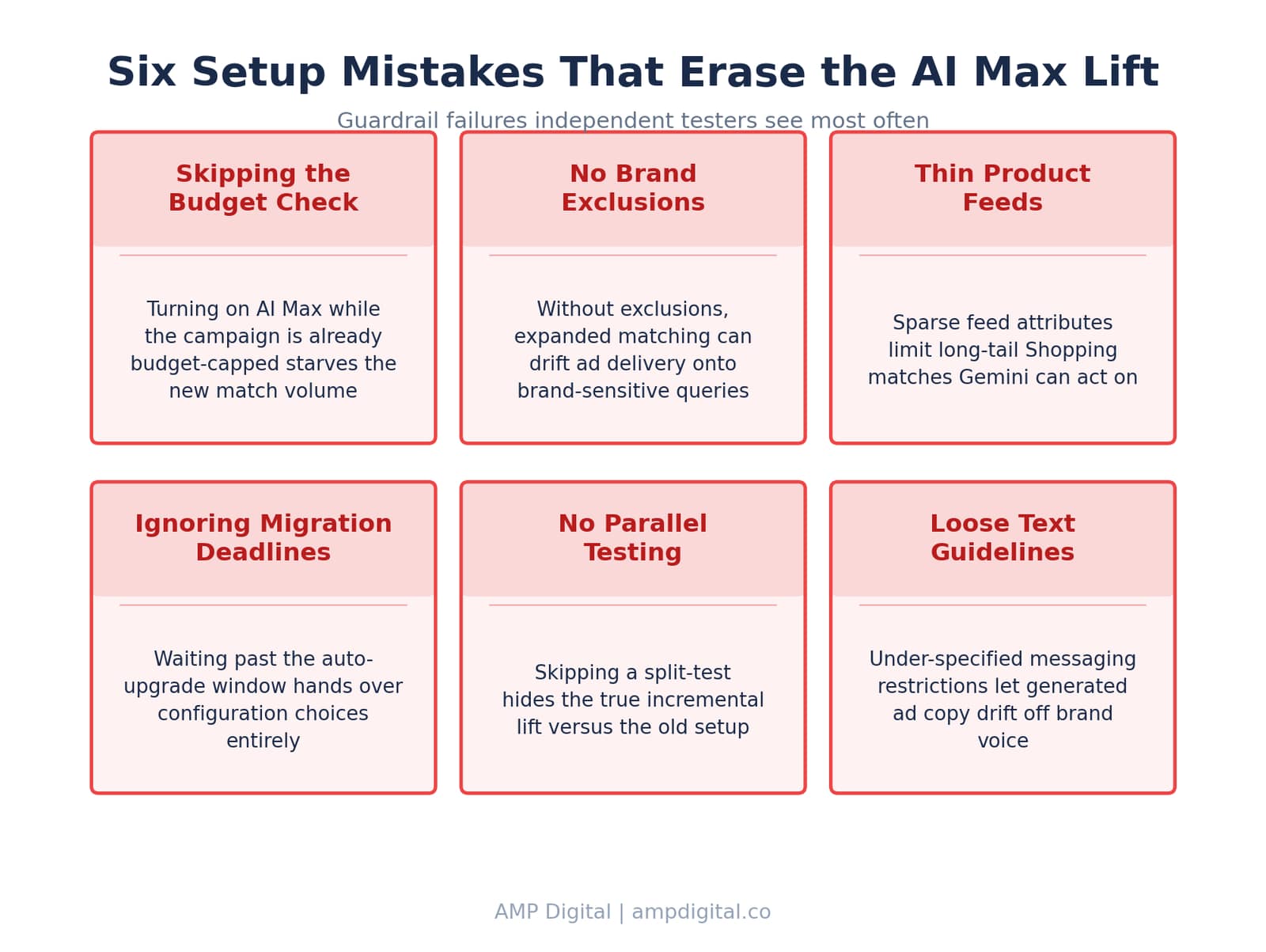
Figure 9. The setup mistakes most likely to erase the AI Max lift.
Best Practice
Treat the first six weeks as a measurement period, not a rollout. Export baseline query, conversion, and CPA/ROAS data before activating AI Max, then compare it against the experiment split Google now builds directly into the activation flow.
V. Conclusion & Action Plan
Conversational search is not a temporary trend produced by chatbots; it is how people now default to phrasing what they want, and Google's own search results, AI Overviews, and AI Mode are being built around that behavior. A keyword list, however well maintained, cannot keep pace with that shift on its own. Capturing conversational search intent is becoming a prerequisite for long-tail PPC growth, not an optional enhancement.
AI Max is Google's mechanism for closing that gap inside the campaign structure marketers already run. The reported lift, 7% for the full feature suite and up to 27% for exact/phrase-heavy accounts, is meaningful, but the honest reading of the independent data is that the lift arrives bundled with a CPA increase for many advertisers. The marketers who benefit most are the ones who pilot deliberately, feed the system clean data, and keep guardrails on brand and budget from day one.
Summary
Action Plan:
1. Audit your current Search campaigns for high-intent, long-tail queries you are already seeing in Search Terms reports but not targeting directly.
2. Pilot AI Max on one or two core campaigns using Google's built-in experiment split, not a blanket account-wide rollout.
3. Set brand exclusions, location of interest, and text guidelines before activation, not after.
4. Measure conversion value lift against CPA change over a full four-to-six week window before deciding on a wider rollout.
The window to make these choices deliberately is closing. Voluntary migration runs through August 2026, after which the auto-upgrade begins deciding configuration on your behalf. Audit now, pilot on your terms, and let the data, not the deadline, decide how far AI Max goes in your account.